

Welcome to another educational blog post on VPS and cloud infrastructure, proudly brought to you by Mixal.
When a growing business or organization decides it’s time to upgrade its IT infrastructure, they usually slam right into two heavy-hitting terms: Virtual Private Servers (VPS) and Cloud Servers. Right off the bat, you’ll notice a difference in price, but that price tag is just the tip of the iceberg. Beneath the surface, these two solutions offer fundamentally different architectures, use cases, and advantages.
Understanding the technical nuances between a VPS and a cloud server is absolutely critical for figuring out which one aligns with your goals. So, in today’s deep dive, we are going to unpack the exact details, pros, and cons of each, empowering you to make the smartest choice for your project’s growth. Let’s get into it!
VPS vs. Cloud Server: The Head-to-Head Comparison
So, how do they actually stack up against each other? The differences really come down to architecture, flexibility, and how they handle failure.
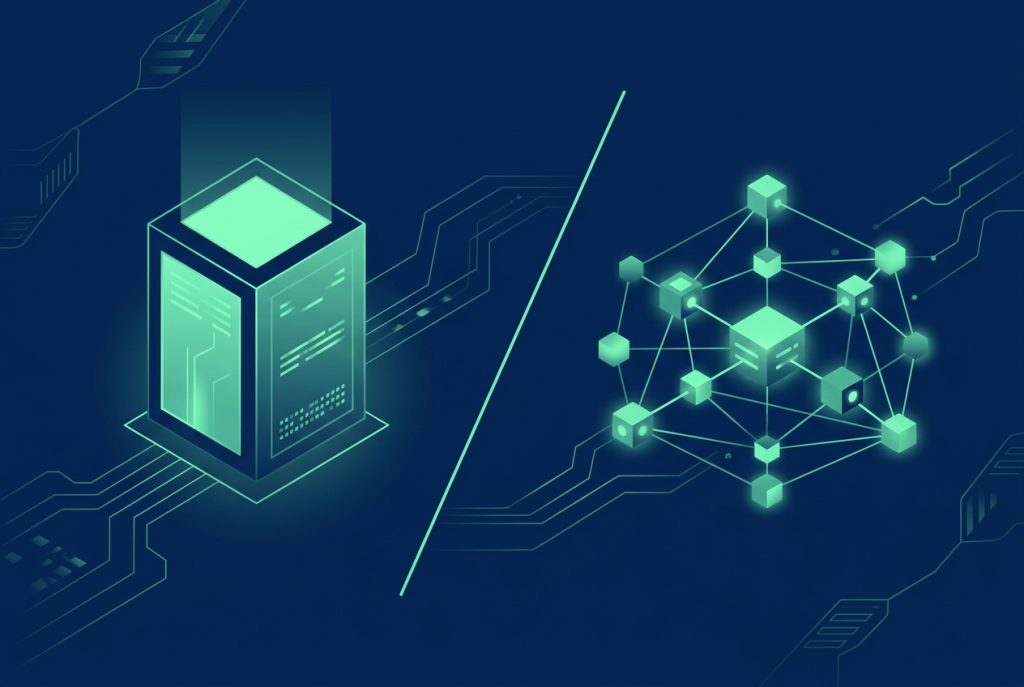
In a traditional VPS, you are getting dedicated, but strictly limited, resources on a single physical server. In a cloud server environment, those resources are distributed across a vast network, which inherently boosts stability and uptime. Because cloud architecture is fundamentally more modern, it offers instantaneous scalability that a traditional VPS just can’t match, making it a dream for rapidly scaling businesses.
From a pricing perspective, a VPS is generally the more budget-friendly option. It gives you incredible bang for your buck. However, cloud servers justify their slightly higher price tag by offering advanced features like auto-scaling and resource redundancy.
When it comes to speed and performance, both will give you a blazing-fast experience. However, cloud servers often edge out a VPS under heavy load because they can distribute that load across multiple machines. On the flip side, a VPS can sometimes offer more predictable, stable performance for specific, consistent workloads because your resources are hard-allocated and guaranteed.
Let’s look at customization. A VPS actually gives you a bit more freedom to tinker. You have total control to install highly specific, custom OS configurations. Cloud servers, while incredibly flexible at the network level, sometimes restrict you to pre-configured, optimized OS images provided by the host.
Finally, the biggest differentiator: Redundancy. Because a VPS lives on one physical machine, if that machine suffers a catastrophic hardware failure, your server goes down with it (unless you have backups). Cloud servers utilize a distributed architecture, meaning your data is mirrored. If a node dies, your site stays live.
Here is a quick summary of how they compare:
| Comparison Metric | Virtual Private Server (VPS) | Cloud Server |
| Overall Performance | Excellent, but bound by single-server limits. | Often superior due to distributed load balancing. |
| Scalability | Limited by the physical host’s capacity. | Highly scalable; nearly limitless on-demand expansion. |
| Security Level | Highly dependent on user configuration. | Robust, multi-layered security managed by the provider. |
| Customization | Extremely high (total OS freedom). | Slightly more restricted to provider templates. |
| Redundancy | Low (single point of failure risk). | High (data distributed across multiple nodes). |
| Price | Generally more affordable. | Can be more expensive, often pay-as-you-go. |
Following is a deep down explanation of both VPS and cloud server
What is a Virtual Private Server (VPS)?
A Virtual Private Server, commonly known as a VPS, is a specialized environment that lives within a broader VPS hosting ecosystem. It grants users access to a virtually isolated slice of a physical server. Through the magic of server virtualization and hypervisor software, a single, robust physical server is partitioned into several independent virtual machines.
Read More: What is VPS?
What is a Cloud Server?
Now, let’s shift gears to the cloud. A Cloud Server is a dynamic, highly scalable server environment that runs on a massive Cloud Computing infrastructure. Instead of relying on a single piece of hardware, cloud servers pool resources from a vast network of physical machines housed in a datacenter. These are typically delivered through service models like IaaS (Infrastructure as a Service), PaaS (Platform as a Service), and SaaS (Software as a Service).
Read More: What is Cloud Hosting?
Conclusion: Which One Should You Buy?
When we look at the core metrics, cloud servers generally take the crown for overall performance and reliability. Aside from the massive difference in scalability, the day-to-day operation of both servers feels quite similar to an end-user. The main takeaway is that cloud computing utilizes a fleet of servers, while a VPS relies on just one.
If you are running a small to medium-sized business that experiences traffic spikes, or if you are building a SaaS product, a cloud server is likely your best bet. However, if you are a larger business with highly specific, consistent workload requirements—or a developer who needs an isolated sandbox with total customization—a VPS is an incredibly powerful, cost-effective tool.
Ultimately, choosing between a virtual or cloud server comes down to your specific operational needs, your technical expertise, and your budget.
At Mixal, our mission is to deliver exceptional, growth-focused solutions that exceed your expectations. Whether you need a rock-solid small business hosting plan, want to buy Canada domain name to kickstart your brand, or are looking to set up professional email hosting canada for your team, we have the infrastructure to empower your vision.
Frequently Asked Questions
1. Which is cheaper: a VPS or a Cloud Server?
In most cases, a traditional VPS is the more affordable option. However, the exact price always depends on the specific provider, the allocated resources, and the features included in the plan.
2. What kind of businesses are best suited for a VPS?
Generally speaking, because a VPS offers deep administrative control, excellent I/O performance, and the ability to handle specific Big Data configurations, they are fantastic for established businesses and developers who need a highly customized, predictable environment.
3. How exactly does “redundancy” work in cloud servers?
In a cloud environment, your data isn’t just sitting on one hard drive. It is distributed across a massive network of separate servers. Therefore, if one server experiences a hardware failure or gets hit by a DDoS attack, the other servers in the network instantly pick up the slack, ensuring your application continues running without a single hiccup.